Enneagram 3 vs 7: How to Finally Tell These Two Types Apart
Sarah sat across from me on a Tuesday afternoon, frustrated. She'd been typed as a 7 for two years but couldn't settle on the label. The confusion around enneagram 3 vs 7 had haunted her. Always starting new projects, hated routine, couldn't finish anything. Then she read that 7s flee pain.
That's when it clicked.
Everything she'd ever started in the past three years was a way of not sitting with the fact that her last startup failed publicly. She wasn't a 7 running toward excitement. She was a 7 running away from devastation.
Here's my actual take: the confusion between enneagram 3 vs 7 runs so deep because both types are high-energy, charming, future-focused, and deeply uncomfortable with failure and boredom. On the surface, they look almost identical. New projects. Magnetic energy. Can't sit still. Hate being ordinary.
The difference isn't what they love. It's what they're running from.
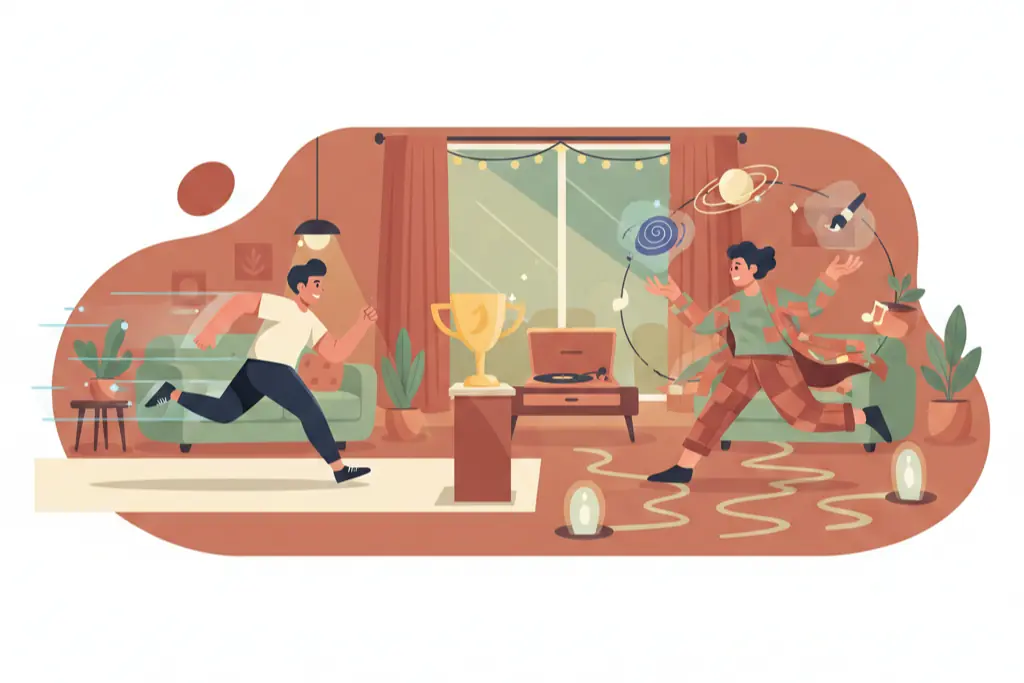
Enneagram 3 vs 7: The Core Difference — Toward vs. Away
A 3 is running toward achievement. Image. Success. Being seen as competent. The 3's internal monologue: "I will become someone worth knowing."
A 7 is running away from pain, limitation, and missing out. The 7's internal monologue: "Anything but this feeling right now."
Both end up productive. Both end up charming. Both end up starting things. But the why is completely opposite.
I know a 3 named Marcus who spent six weeks preparing a dinner party so it would look "spontaneous and fun." He picked the wine. Perfected the playlist. Had pre-made conversation topics. Every detail was orchestrated to give one specific impression: he was effortlessly social, sophisticated, worth your time.
When a guest arrived late, he was visibly angry for exactly forty-five seconds — then switched back on. You could see him recalibrating his image.
A 7 in the same situation would have ordered pizza. Been genuinely happy about it. The spontaneity would be actual spontaneity, not performed.
The Tell: What Happens After Failure
The standard Enneagram advice is "look at your core fear." Type 3's fear is being worthless. Type 7's fear is pain and limitation.
But here's the problem: most people don't know their core fear because they've spent years rationalising it. A better test exists.
Ask yourself: what do you do the day after a significant, public failure?
A 3 is devastated. Crushed. They spend weeks trying to reframe it as a lesson, a growth moment, something that proves their resilience. The narrative work is exhausting. They need to feel that the failure was meaningful — that it teaches something about their competence.
A 7 pivots immediately to the next thing. And they genuinely can't stay with the discomfort long enough to process what happened. By week two, they've started three new projects. They talk about "moving on" and "not dwelling." They'll admit they should probably process it, but the thought of sitting with it for even an hour feels impossible.
Ask a 3 about a public failure and you get a narrative. A carefully constructed story about what it meant and what they learned.
Ask a 7 about a public failure and you get: "Yeah, it sucked, but we're doing this new thing now which is way better."
Curious about your own type?
Take the free Enneagram personality test and get your full profile in minutes.
Discover Your Type →Am I Enneagram 3 or 7? Three Questions to Ask Yourself
1. What do you actually want?
Sit with this. Not what looks good to want. What do you actually want?
A 3 will have a specific vision of the person they want to become. They can describe it. They've been building toward it. They care deeply that this version of themselves exists and is impressive.
A 7 will have a harder time naming it because they're more interested in avoiding something than building something. "I want to be free. I want to have options. I want to not be bored." The wanting is always a "not this."
2. How do you respond to being ordinary?
Boring small talk? No goals for the next three months? Just... existing without doing?
A 3 will feel their worth evaporating. They'll start a project. Start preparing for something. Anything to feel like they're building something visible.
A 7 will feel anxious. Trapped. Limited. They'll look for stimulation or novelty just to feel alive.
The 3 fears worthlessness. The 7 fears entrapment.
3. What's your relationship to finishing things?
A 3 finishes things because the completion is part of the achievement. Finishing proves competence.
A 7 struggles with finishing because once a project is underway (when it's novel and interesting), the real work of completion feels tedious. Boring. Limited.
Neither type is good at seeing a vision through to the end in the same way a 1 or an 8 is. But their reasons are completely different.

The Contrarian Take
Everyone talks about the differences in style — one is more image-conscious, one is more scattered. But here's what nobody talks about: both types are deeply using other people to manage their emotional states.
A 3 uses achievement and the admiration of others to feel like they have value. They're not doing it to help people — they're doing it to feel okay about themselves.
A 7 uses novelty and excitement and the energy of others to escape inner discomfort. They're not seeking joy — they're seeking numbness.
If you're trying to figure out whether you're a 3 or 7, ask yourself: am I building toward something I genuinely value? Or am I running away from something I can't sit with?
The answer matters more than the label.
Learn more about how childhood shapes your Enneagram type and explore stress and growth patterns for your type.
Curious about your own type?
Take the free Enneagram personality test and get your full profile in minutes.
Discover Your Type →